policy and funding
UKGBC says Budget takes £1bn out of Warm Homes Plan and sends mixed signal on retrofit
The UK Green Building Council has welcomed the new Warm Homes Loan Scheme but said the Budget's £1bn capital cut and a VAT rise on energy saving materials leave the retrofit market without a stable pathway.
The UK Green Building Council (UKGBC) has said the Autumn Budget 2026 removes £1bn of capital from the Warm Homes Plan and leaves the retrofit industry without the long-term certainty it needs to invest.
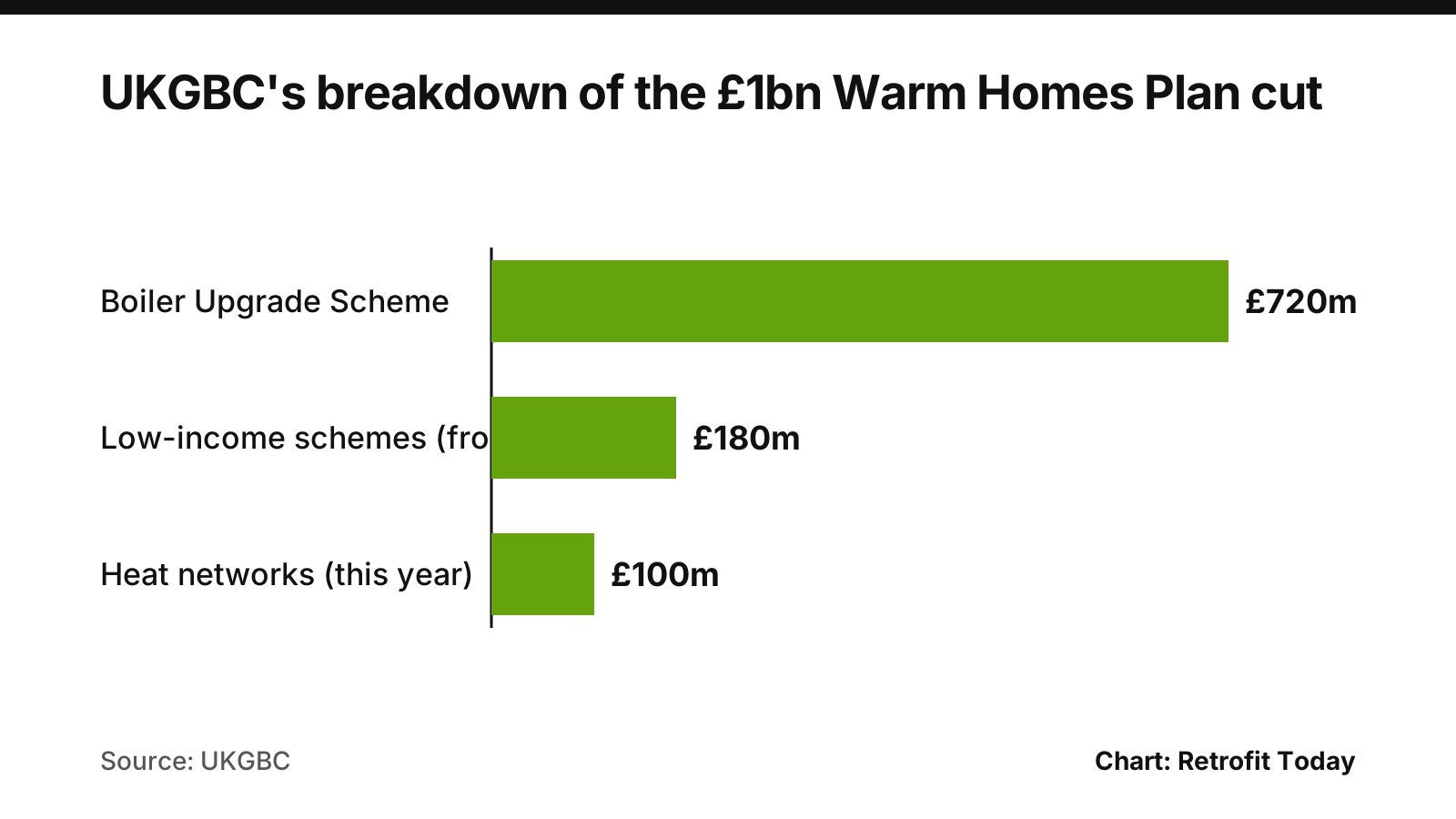
In its response to the Budget, the body said the Boiler Upgrade Scheme bears the largest share of the cut at about £720m, with a further £180m taken from low-income schemes from 2028 and £100m from heat networks this financial year.
Simon McWhirter, chief executive of UKGBC, said the body was pleased to hear the Chancellor's recommitment to the Net Zero 2050 target. He said: "The Warm Homes Loan Scheme is a welcome and pragmatic step towards a retrofit market that can increasingly stand on its own feet, giving more households a route to fund heat pumps, solar and other upgrades."
He added: "But any overall reduction to housing upgrade funding is dangerous, and with the details of the Warm Homes Plan cuts in this area still unclear, industry needs Government to provide clarity as soon as possible."
The cut
UKGBC's breakdown of the £1bn figure is its own; the body noted that the Treasury says most funding for low-income households and social housing delivered by mayors and councils is protected, and that the Boiler Upgrade Scheme will stay at £400m in 2027-28, rising broadly with inflation after that.
| Element of the Warm Homes Plan | Cut, according to UKGBC |
|---|---|
| Boiler Upgrade Scheme | about £720m |
| Low-income schemes (from 2028) | £180m |
| Heat networks (this financial year) | £100m |
For context, the Warm Homes Plan as published by the Department for Energy Security and Net Zero (DESNZ) was to deliver £15bn of public investment to upgrade up to 5 million homes. Within that, DESNZ allocated £2.7bn to the Boiler Upgrade Scheme, £1.1bn to heat networks and £2bn to consumer loans.
UKGBC said cutting funding while VAT on energy saving materials reverts to 5% from April 2027 "sends a mixed signal about whether government wants these upgrades to become cheaper or not".
Loans and bills
The Treasury's Budget press release said the new Warm Homes loans scheme will help households spread the upfront cost of solar panels, batteries and heat pumps.
UKGBC said loans must complement grants rather than replace them, because households under the greatest pressure from energy bills are the least able to borrow.
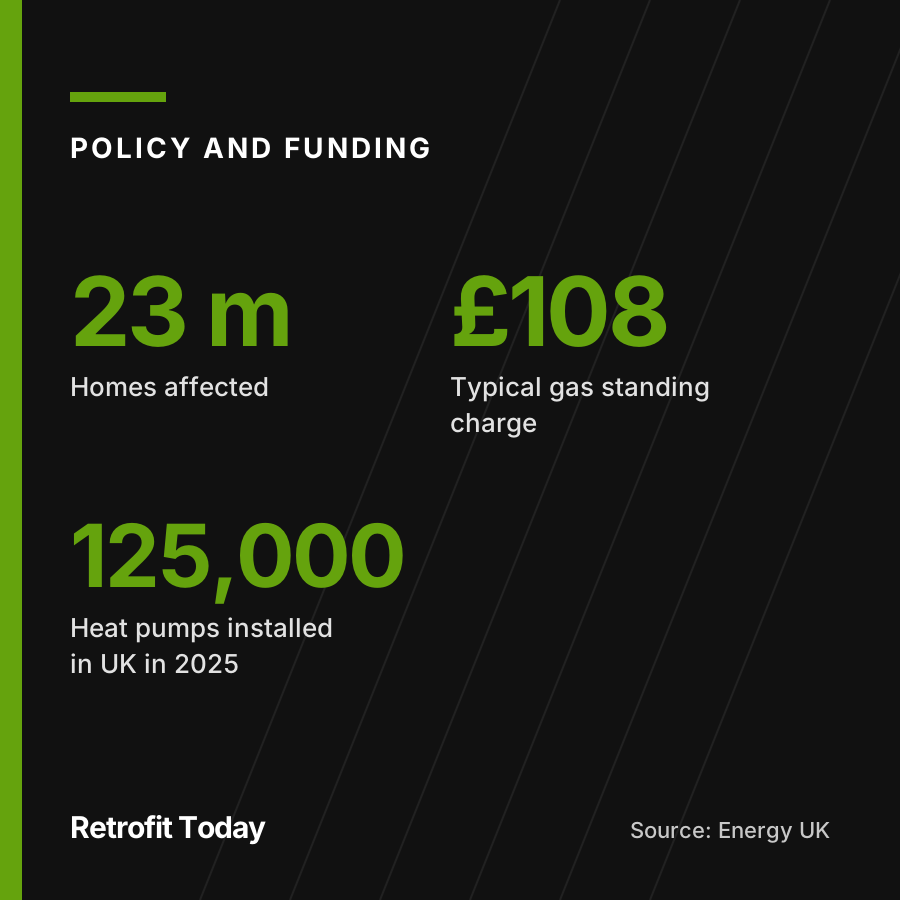
On bills, DESNZ said the Household Energy Payment will give £100 to households in council tax bands A to D in England, with up to 20 million households eligible and payments made from January 2027. DESNZ said the VAT cut on household electricity bills introduced on 1 October has been extended until July 2027, and that it has asked Ofgem to remove standing charges on household gas bills as early as 2027. The Treasury said the charges would move to unit rates.
Data centres
UKGBC described the Data Centre Covenant, published by HM Treasury, as a promising step. The covenant says government will support faster and more certain delivery of data centres, and asks strategic data centres to capture the heat they produce for nearby homes, schools, hospitals or businesses "wherever practical" and to agree a Local Benefit Plan committing to substantial investment.
The Treasury said it will set out the definition of strategic data centres in due course and will develop a tightly controlled framework to permit on-site generation.
UKGBC said heat capture only "where practical" risks turning an opportunity for local heat networks into an afterthought, particularly when heat network funding has just been cut. It said it is looking to convene members on how data centres can be delivered to minimise their downsides and realise positive local impacts.
Resilience, nature and housing
UKGBC said the Budget contains little on protecting buildings from climate impacts and that the 2027 Spending Review must fill the gap.
It welcomed mandatory Biodiversity Net Gain for nationally significant infrastructure projects from November 2026 but said it was "far less convinced" by the exemption for residential brownfield sites of up to 1.5 hectares.
The body welcomed a further £1.5bn for social and affordable homes, taking the programme above £40bn; the Budget document says the money will deliver about 10,000 homes in England. UKGBC said the pledge of no major changes to building regulations this Parliament must not become a freeze on ambition, with embodied carbon still a blind spot. It also noted £285m for Good Growth Funds and a £1.5bn borrowing facility for mayors from 2028.
UKGBC, which says it is powered by more than 580 member organisations, closed by saying industry needs grants that last long enough to build a market, finance that widens access and a skilled workforce backed by a pathway it can plan against. According to UKGBC, VAT on energy saving materials reverts to 5% from April 2027.
On the record: Department for Energy Security and Net Zero
Sources
- UKGBC (opens in a new tab) (accessed 2026-10-29)
- HM Treasury (opens in a new tab) (accessed 2026-10-29)
- Department for Energy Security and Net Zero (opens in a new tab) (accessed 2026-10-29)
- HM Treasury (opens in a new tab) (accessed 2026-10-29)
- Department for Energy Security & Net Zero (opens in a new tab) (accessed 2026-10-29)
- HM Treasury (opens in a new tab) (accessed 2026-10-29)
- UKGBC (opens in a new tab) (accessed 2026-10-29)
This story was researched from the primary sources above and checked against them before publication. Spotted an error? Tell us and we will correct it promptly.