policy and funding
Government to move gas standing charges on to unit rate in shift Octopus links to heat pumps
The Chancellor will ask Ofgem to remove the fixed daily charge from household gas bills in 2027 or as soon as possible after, a change Octopus Energy's Greg Jackson links to heat pump uptake.
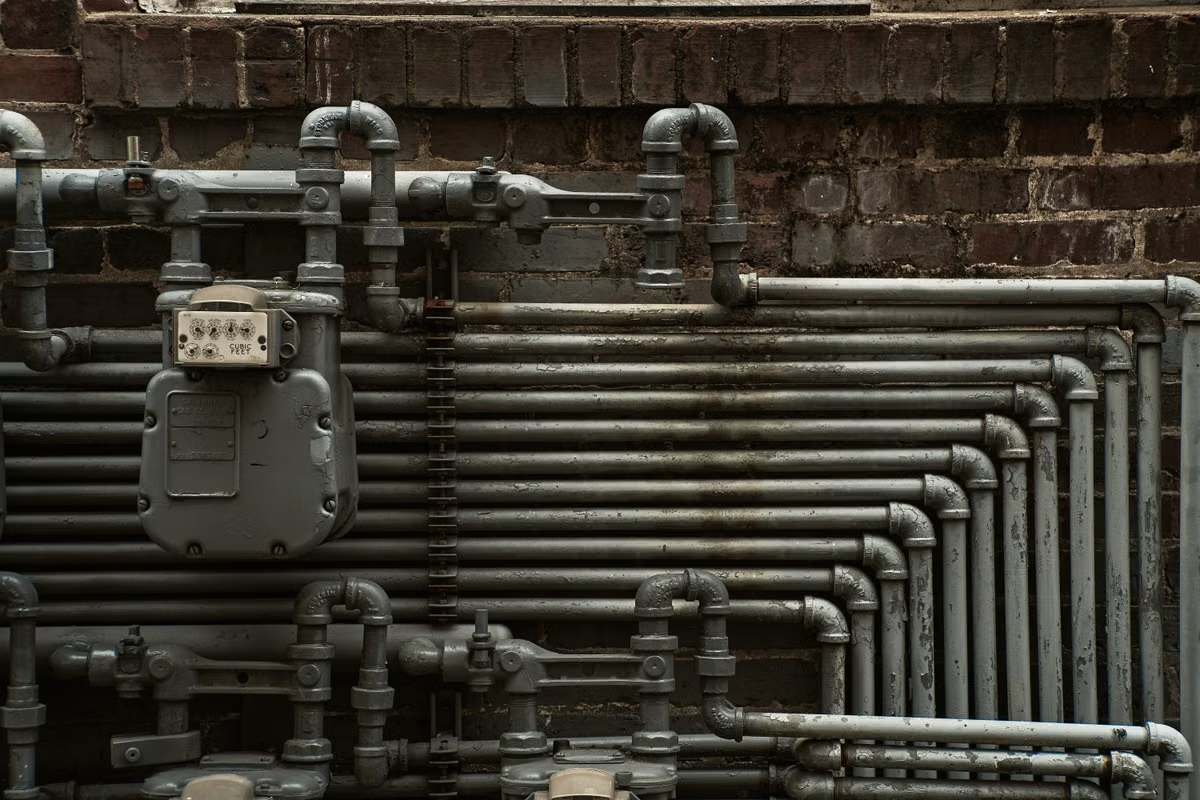
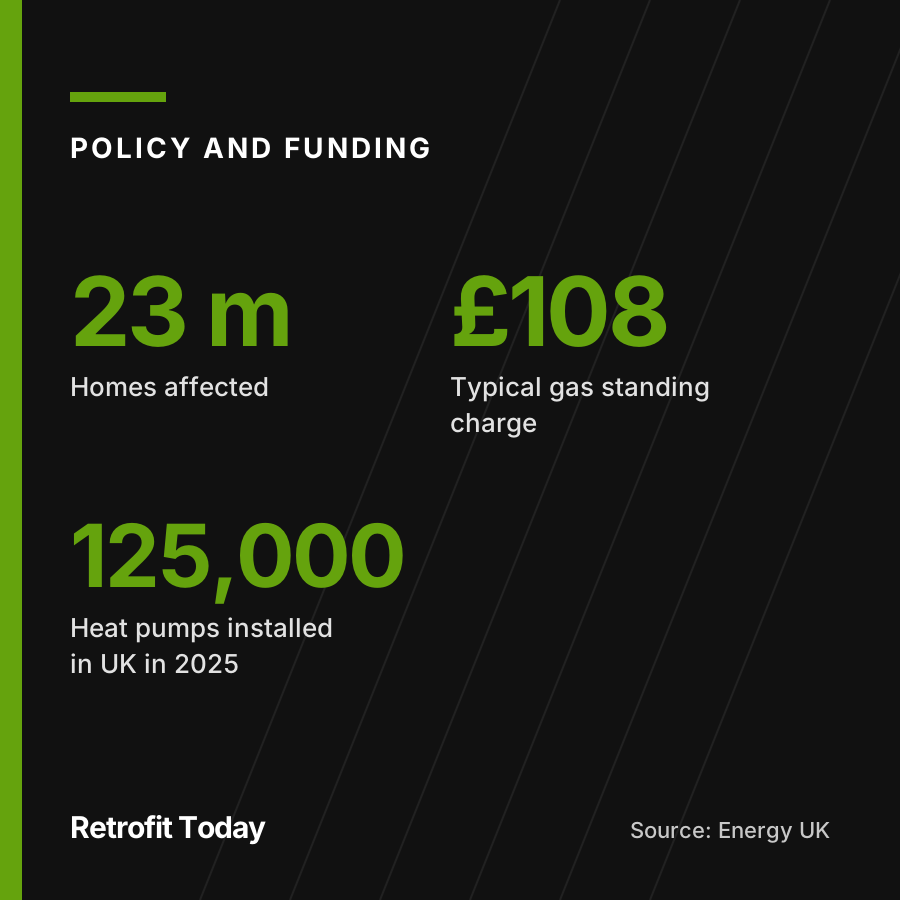
The Chancellor will ask Ofgem to take standing charges off gas bills for around 23 million homes in 2027 or as soon as possible after, with the fixed costs recovered through the unit rate instead.
The announcement, published by the Prime Minister's Office, HM Treasury and the Department for Energy Security and Net Zero on 28 October 2026, the day of the Budget, said the charge averages £108 a year for a typical household. A standing charge is a fixed daily fee payable regardless of how much gas is used.
HM Treasury modelling suggests the change could save 60% of account-holding households an average of about £45 a year, the government said. It added that it will set out targeted mitigation "in due course" for a small number of households that do not see an automatic saving.
Greg Jackson, Founder and CEO of Octopus Energy Group, said: "Most customers would see a cut in their gas bills which is crucial, but would also enjoy even higher savings if they can move to heat pumps when it suits them." He said the move was "further improving the ratio of electricity to gas prices".
The price ratio
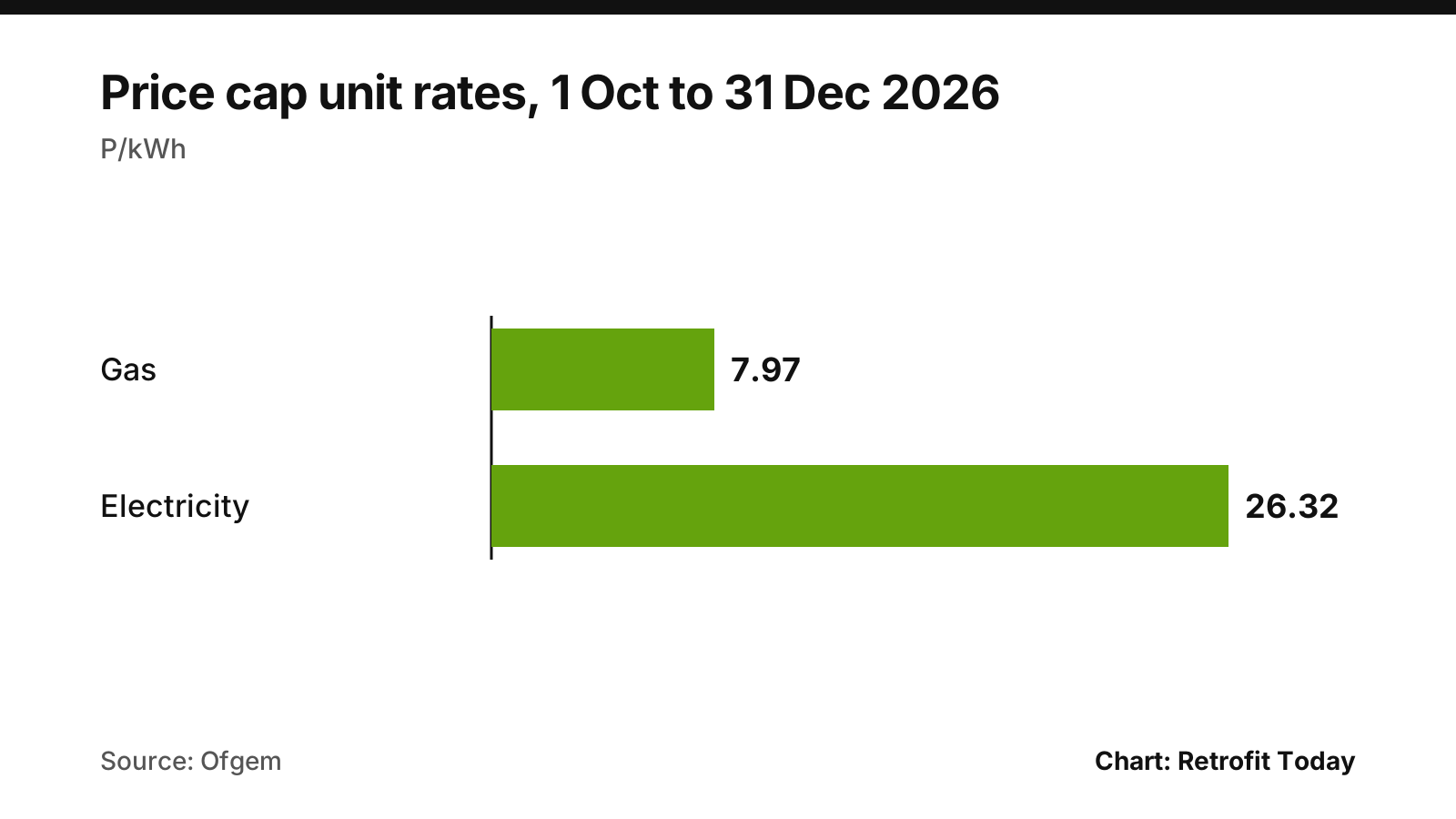
Loading the gas standing charge on to the gas unit rate raises the price of each kilowatt hour of gas used. Under Ofgem's price cap for 1 October to 31 December 2026, the regulator's published averages for Direct Debit customers are:
| Fuel | Standing charge (p/day) | Unit rate (p/kWh) |
|---|---|---|
| Gas | 29.68 | 7.97 |
| Electricity | 54.83 | 26.32 |
Ofgem said prices for a typical household rose 4% from 1 October 2026 because of higher wholesale gas prices, which it attributed to the conflict in the Middle East. VAT has been removed from electricity bills from 1 October 2026 to 31 March 2027, while gas still carries 5% VAT. The government said the VAT cut made the October price cap £45 a year lower than it would otherwise have been, building on £150 taken off bills at the previous Budget.
Costs moved, not removed
Ofgem has previously said it "cannot remove the costs that make up the standing charge from the system". Tim Jarvis, Director General, Markets at Ofgem, said: "The costs covered by the standing charge ultimately must be paid." The regulator said fixed costs include the wires and cables that deliver energy, policy costs such as the Warm Home Discount and suppliers' customer service.
Ofgem's own standing charges review found that the shift it examined would give many consumers a modest benefit but "a smaller number of consumers would see a very large cost", and that many low-income or vulnerable consumers could be hurt by a change in how the charges are allocated. Tens of thousands of consumers responded to its call for input to express dissatisfaction with the current system, the regulator said.
The government's figure of 60% of households saving around £45 is drawn from HM Treasury's Distributional Analysis Model, using Office for National Statistics Living Costs and Food Survey data from 2018/19, 2019/20 and 2022/23, adjusted to Ofgem's October to December 2026 rates. The methodology note says the analysis is static and does not account for behavioural changes.
Ofgem is separately running a one-year lower standing charge tariff pilot from June 2026, first offered to eligible customers of EDF, E.ON, Octopus and British Gas. The regulator said it expects suppliers to set higher unit rates on those tariffs.
Wider energy policy
Prime Minister Andy Burnham said abolishing gas standing charges was about fairness and giving people more control over bills, while Chancellor of the Exchequer John Healey said the Budget would "draw a line in the sand" on energy policy. Energy Secretary Miatta Fahnbulleh said tackling affordability was her number one priority.
The announcement follows the Energy Wealth Fund, announced on 21 October 2026, which sits within the National Wealth Fund, starts with an initial £2bn and will invest in renewable and low carbon energy infrastructure across the UK, with future North Sea revenues flowing into it over time.
The government's request to Ofgem is for delivery of the gas standing charge change in 2027 or as soon as possible after.
On the record: Department for Energy Security and Net Zero, EDF
Sources
- GOV.UK (Prime Minister's Office, HM Treasury, Department for Energy Security and Net Zero) (opens in a new tab) (accessed 2026-10-28)
- Ofgem (opens in a new tab) (accessed 2026-10-28)
- Ofgem (opens in a new tab) (accessed 2026-10-28)
- Ofgem (opens in a new tab) (accessed 2026-10-28)
- Ofgem (opens in a new tab) (accessed 2026-10-28)
- GOV.UK (HM Treasury) (opens in a new tab) (accessed 2026-10-28)
- GOV.UK (Department for Energy Security and Net Zero, HM Treasury) (opens in a new tab) (accessed 2026-10-28)
This story was researched from the primary sources above and checked against them before publication. Spotted an error? Tell us and we will correct it promptly.