policy and funding
Scottish Government publishes consultation findings on energy standards for private rented homes
The Scottish Government's analysis of 316 responses shows 68% backing for technical suitability assessments, with most respondents disagreeing with the proposed 2028 and 2033 dates and the £10,000 cost cap.

The Scottish Government has published analysis of its consultation on minimum energy efficiency standards for private rented homes, with 68% of the 316 respondents backing technical suitability assessments and most disagreeing with the proposed 2028 and 2033 dates and the £10,000 cost cap.
The consultation ran from 6 June to 29 August 2025, according to the Scottish Government, and drew 107 responses from organisations and 209 from individuals. Elmhurst Energy, which said it was the only government-approved Energy Performance Certificate (EPC) accreditation scheme to respond, published its own summary of the findings on 8 October.
The June 2025 consultation proposed that private rented homes meet EPC Heat Retention Rating (HRR) band C, applying to new tenancies from 2028 unless exempt, with a proposed cost cap of £10,000 on required improvements. Elmhurst said the final requirements and implementation timetable remain unconfirmed.
Joanne Bailey, Existing Dwellings Technical Lead at Elmhurst Energy, said: "However, the scale of the challenge should not be underestimated."
The findings
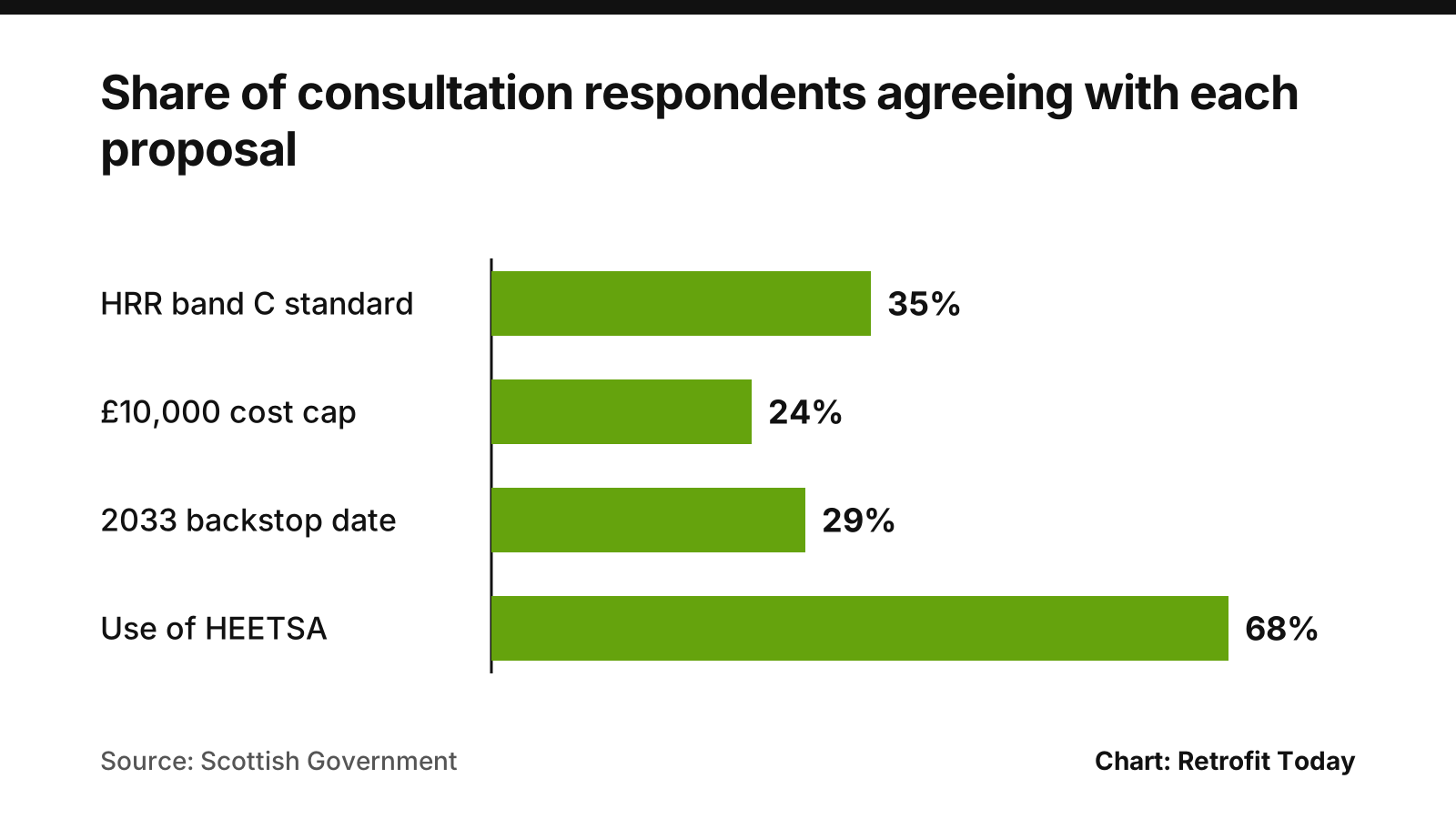
The Scottish Government's analysis reports that just over a third of respondents (35%) agreed the standard should be HRR band C, while 54% disagreed. A majority (59%) did not agree that the standard should apply to properties let to new tenants from 2028, and 56% disagreed with the 2033 backstop date for all private rented homes, against 29% who agreed.
The £10,000 cost cap drew limited support, with 24% in favour and 59% against. The clearest backing was for the proposed use of Heat and Energy Efficiency Technical Suitability Assessments (HEETSA): 68% of respondents agreed, with 10% disagreeing.
| Proposal | Respondents agreeing |
|---|---|
| HRR band C standard | 35% |
| £10,000 cost cap | 24% |
| 2033 backstop date | 29% |
| Use of HEETSA | 68% |
Some respondents told the Scottish Government that the likely payback time of a loan would be too long, particularly if rent controls are put in place.
Bailey said: "The consultation findings reinforce the importance of introducing standards that are both ambitious and achievable."
Tenants' views
Alongside the analysis, the Scottish Government published tenant engagement research based on focus groups and interviews with 36 private rented sector tenants.
Participants identified a potential loss of affordable housing as the most pressing risk of the standards, and many doubted that landlord compliance would be consistently monitored and enforced. With trust in landlords low, the report found tenants responded well to the legal obligation the proposed standards would create.
Elmhurst said in June 2025 that local authorities would be responsible for monitoring and enforcing the regulations.
The housing stock
The Scottish Government's partial business and regulatory impact assessment puts the private rented sector at around 300,000 homes and says 52% are already EPC band C or above. It estimates 44% of private rented dwellings are in fuel poverty. Earlier regulations for the sector, made in 2020, were withdrawn because of the impact of the Covid pandemic, the assessment says.
Across all Scottish homes, the Scottish House Condition Survey 2024 found 56% rated C or better under SAP 2012.
Elmhurst noted in June 2025 that the proposed £10,000 Scottish cap is lower than the £15,000 cap proposed in England and Wales.
What happens next
Elmhurst said the minimum standard would be based on a reformed Scottish EPC system carrying a dedicated Heat Retention Rating metric, which it described as proposed for introduction in April 2028. The company said it will continue to monitor developments and keep its members informed as further details become available.
Sources
- Elmhurst Energy (opens in a new tab) (accessed 2026-10-08)
- Scottish Government (opens in a new tab) (accessed 2026-10-08)
- Scottish Government (opens in a new tab) (accessed 2026-10-08)
- Scottish Government (opens in a new tab) (accessed 2026-10-08)
- Scottish Government (opens in a new tab) (accessed 2026-10-08)
- Scottish Government (opens in a new tab) (accessed 2026-10-08)
- Scottish Government (opens in a new tab) (accessed 2026-10-08)
- Elmhurst Energy (opens in a new tab) (accessed 2026-10-08)
This story was researched from the primary sources above and checked against them before publication. Spotted an error? Tell us and we will correct it promptly.