policy and funding
NEA says typical winter energy bill will be £150 above 2023 crisis peak
The fuel poverty charity has urged the government to use the £15bn Warm Homes Plan for wide-scale retrofit of the leakiest low-income homes, as it forecasts record costs for the coldest months.
National Energy Action has said a typical household will pay £150 more for energy between January and March 2027 than at the height of the energy crisis in early 2023, and has called on the government to use the Warm Homes Plan for wide-scale retrofit.
The fuel poverty charity published the analysis on 17 November, the day before its Fuel Poverty Awareness Day on Wednesday 18 November, which this year focuses on the effect of fuel poverty on children and their health.
NEA said the difference arose because the price cap is forecast to rise in January and because there is far less government support this winter than in 2023. The charity's figure rests on a Cornwall Insight forecast; Ofgem has not yet set the cap for 1 January to 31 March 2027 and will announce it on 25 November 2026.
Adam Scorer, NEA chief executive, said: "Just as temperatures plummet, people are going to face the highest energy prices they ever have. National Energy Action's analysis shows the energy crisis is far from over, even if the headline price cap figure may obscure this."
The numbers
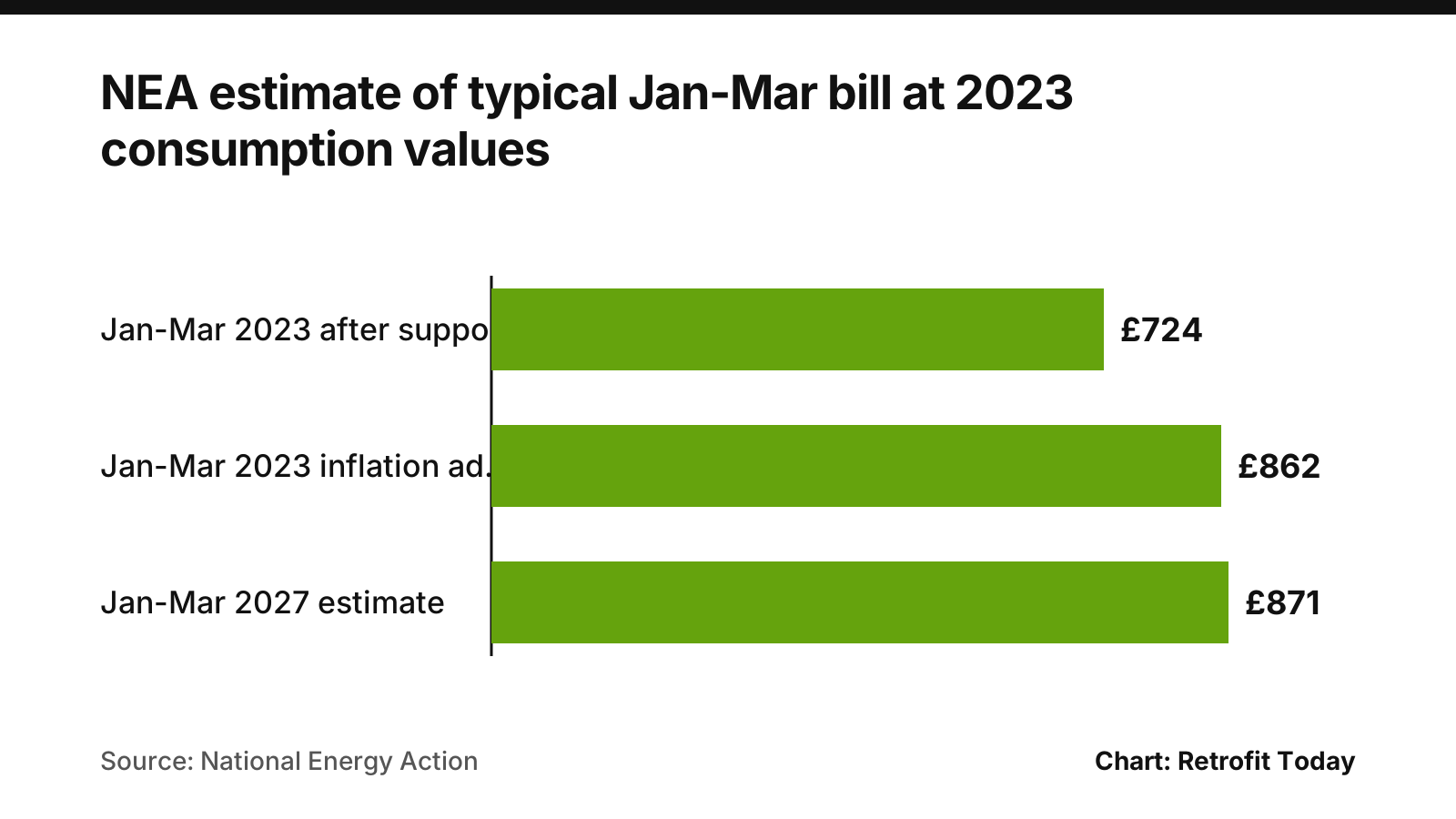
NEA's methodology applies the typical consumption values in place in 2023, of 2,900 kWh of electricity and 12,000 kWh of gas, to today's prices. On that basis it estimates a January to March 2027 bill of £871, against an effective cost of £724 for the same period in 2023 once £200 of the £400 Energy Bills Support Scheme payment is deducted.
The charity's methodology note adds that, after a 19% uplift for inflation, the 2023 figure rises to about £862. In real terms, NEA said, a typical household would still pay around £9 more for the same consumption this winter.
| Typical Jan-Mar bill at 2023 consumption values | £ |
|---|---|
| Jan-Mar 2023, after government support | 724 |
| Jan-Mar 2023, adjusted for 19% inflation | 862 |
| Jan-Mar 2027, NEA estimate | 871 |
NEA said Cornwall Insight's final January forecast, due on 18 November, is likely to be higher than the one it used, and that it would comment when the forecast is released.
Why the headline cap looks different
NEA said Ofgem's headline cap figure for January will obscure the rise because the regulator has twice reduced its assumed typical household consumption since 2022. The charity said that for low-income households this amounts to rationing energy.
Ofgem updated its Typical Domestic Consumption Values from 1 July 2026 to reflect households using around 7% less electricity and 17% less gas than at its last review. Under the old values the July typical bill would have been £1,862; under the new values the cap was £1,663. Ofgem attributed the longer-term fall in consumption to improved energy efficiency, warmer weather and, more recently, higher prices.
On 26 August Ofgem announced that the cap for a typical direct debit household would rise by £60 a year to £1,723 from October, which it said reflected higher wholesale gas prices as a result of the conflict in the Middle East. Neil Kenward, Ofgem's Director General for Markets, said high international gas prices were continuing to drive energy costs in the UK. Under the current cap, direct debit customers pay an average 26.32p per kWh for electricity with a 54.83p daily standing charge, and the government has removed VAT from electricity bills from 1 October 2026 to 31 March 2027.
Scorer said: "It's no surprise to us that consumption levels are down because our clients tell us every day that they're not just cutting back, but cutting off completely." He said fuel poor households need to use more energy, not less, to have a warm and healthy home.
Client data
NEA said more than a quarter of its clients with a health condition or disability switched off essential medical equipment last winter because of worries about energy costs, and more than 80% of its clients with children could not keep their home warm enough when they needed to. Its client database shows 52.8% of households using its advice service have dependent children.
The charity estimates around 10 million UK households are in fuel poverty, including more than 6 million children. It works across England, Wales and Northern Ireland and has done so for over 40 years.
Government support and the Warm Homes Plan
NEA said the government's one-off £100 payment for households in council tax bands A to D will not be enough to keep vulnerable and low-income families warm this winter. According to the Ministry of Housing, Communities and Local Government, councils in England are expected to begin making those payments from January 2027, alongside a £100m discretionary fund for households most acutely affected by rising energy bills, some of which are in bands above A to D.
The charity asked the government to provide deeper, targeted bill support before January, to protect the Debt Relief Scheme from delay or dilution, and to meet rising debt with support rather than greater use of involuntary prepayment meter installation. The Department for Energy Security and Net Zero and Ofgem's joint energy debt strategy puts consumer energy debt in Great Britain at £5bn.
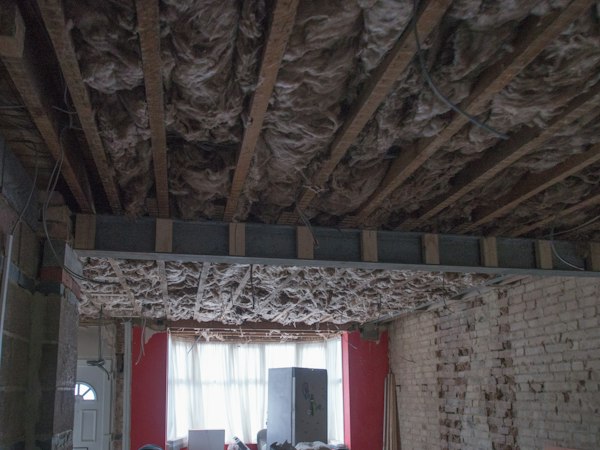
NEA's third ask is for the Warm Homes Plan to deliver wide-scale retrofit, starting with households on the lowest incomes and in the leakiest homes, to insulate the UK from future energy crises.
The plan, published by DESNZ, commits £15bn of public investment to upgrade up to 5 million homes, with around £5bn of that going to low-income and fuel poor households to 2030. It aims to lift up to a million families out of fuel poverty by 2030.
Ofgem's announcement of the January to March 2027 cap is due on 25 November.
On the record: Department for Energy Security and Net Zero, Ministry of Housing, Communities and Local Government
Sources
- National Energy Action (opens in a new tab) (accessed 2026-11-17)
- National Energy Action (opens in a new tab) (accessed 2026-11-17)
- Ofgem (opens in a new tab) (accessed 2026-11-17)
- Ofgem (opens in a new tab) (accessed 2026-11-17)
- Ofgem (opens in a new tab) (accessed 2026-11-17)
- Ministry of Housing, Communities and Local Government (GOV.UK) (opens in a new tab) (accessed 2026-11-17)
- Department for Energy Security and Net Zero and Ofgem (GOV.UK) (opens in a new tab) (accessed 2026-11-17)
- Department for Energy Security and Net Zero (GOV.UK) (opens in a new tab) (accessed 2026-11-17)
This story was researched from the primary sources above and checked against them before publication. Spotted an error? Tell us and we will correct it promptly.