policy and funding
Energy Independence Bill sets £30,000 maximum fine for landlords breaching MEES
The Department for Energy Security and Net Zero has introduced a Bill giving councils stronger powers to enforce minimum energy efficiency standards in rented homes and commercial buildings, with Elmhurst Energy backing the move.
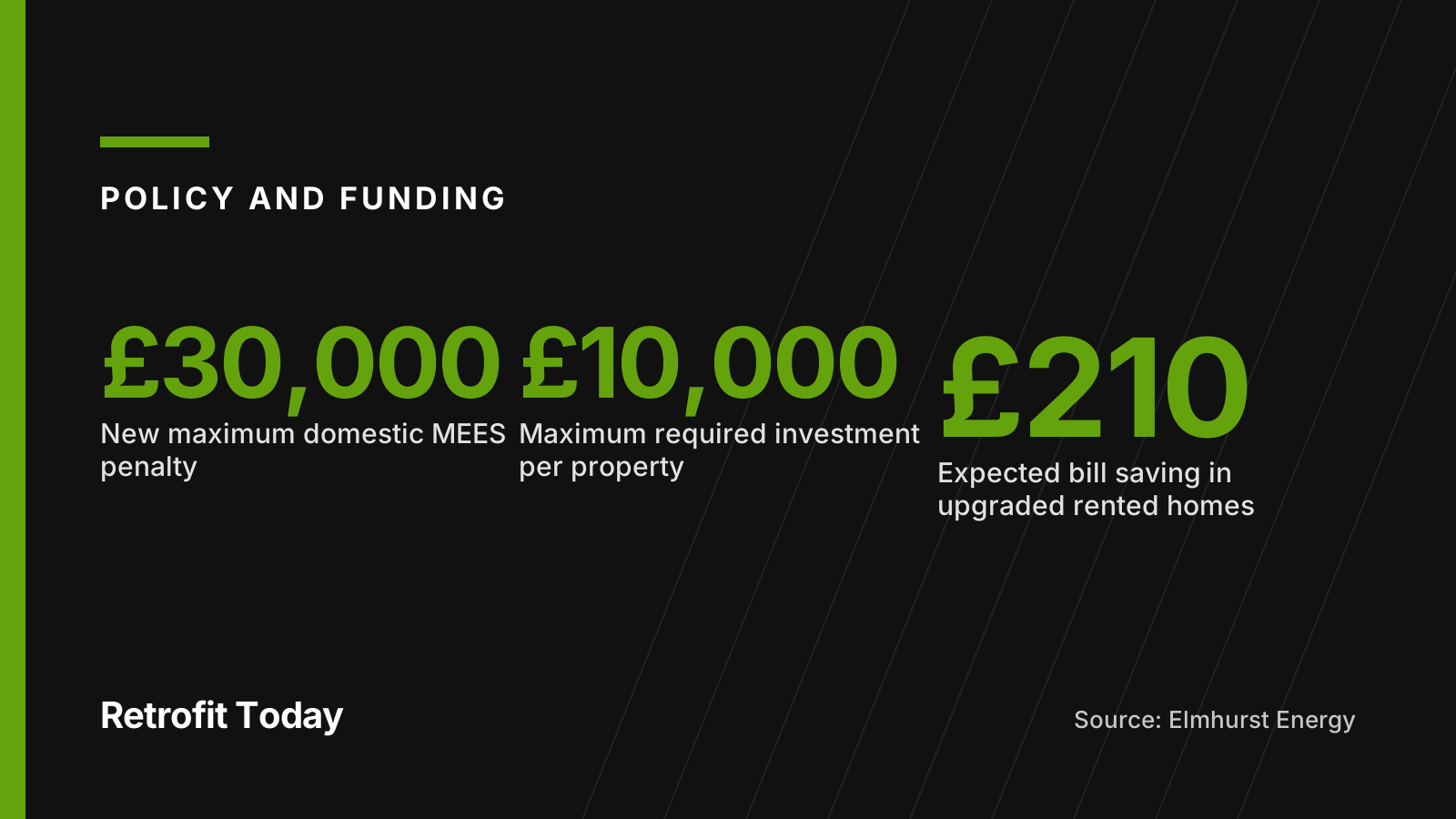
The government introduced the Energy Independence Bill to Parliament on 4 November, giving local authorities stronger powers to enforce minimum energy efficiency standards in the private rented sector, with fines of up to £30,000 for landlords in breach.
The Department for Energy Security and Net Zero (DESNZ) said the enforcement measures support plans to save households in upgraded rented homes about £210 a year by 2030. The Bill would also establish the Warm Homes Agency in law, the department said.
Elmhurst Energy, which published a summary of the Bill on 5 November, said the maximum civil penalty for domestic breaches of the Minimum Energy Efficiency Standards (MEES) would rise from £5,000 to £30,000. The GOV.UK factsheet gives only the new £30,000 maximum.
Energy Secretary Miatta Fahnbulleh said: "Today is a first downpayment on fixing a broken system, protecting consumers from unfair costs".
The domestic measure
According to the DESNZ factsheet, the £30,000 maximum has been set above the £10,000 maximum required investment per property, a figure confirmed in the government's response to its consultation on privately rented homes. On 21 January 2026 the government confirmed that the domestic minimum standard will rise to EPC C from 1 October 2030.
The department said primary legislation is needed because local authority pilot studies and evaluation work showed that secondary legislation alone was insufficient to enforce MEES.
The measure will allow houses in multiple occupation to be required to comply with the regulations, and will require enforcement authorities to report the enforcement action they take, the factsheet said.
Elmhurst said the Bill's enforcement powers include improved compliance information, property inspections and powers to restrict the marketing of non-compliant properties.
Non-domestic buildings
A separate factsheet covers enforcement of MEES in the non-domestic private rented sector. DESNZ said problems with enforcing non-domestic MEES were identified in its 2019 and 2021 consultations.
The non-domestic measure gives the Secretary of State powers to build a compliance database, with clearer inspection powers and improved data-sharing and reporting arrangements. The government said these powers do not impose new standards or costs but make existing rules work.
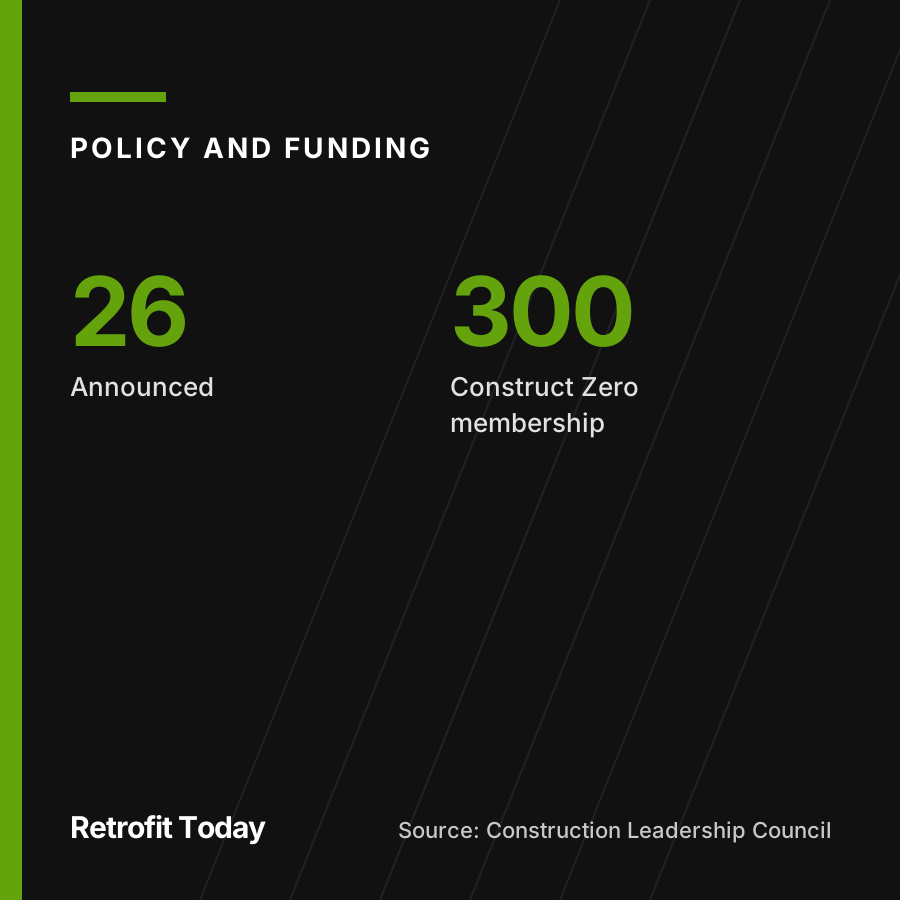
Without the new powers, DESNZ estimates that reduced compliance would cut the non-domestic policy's carbon savings by 26%.
Warm Homes Agency and Scotland
Elmhurst said the Bill would allow responsibility for managing energy schemes to move between government bodies and other organisations, supporting plans for the Warm Homes Agency first announced in the Warm Homes Plan.
The Bill also enables financial assistance, including grants and loans, for schemes improving building energy efficiency, cutting heating emissions and tackling fuel poverty in Scotland, subject to Scottish Ministers' consent, Elmhurst said.
Beyond the retrofit measures, the government said it will bring forward amendments to the Bill to scrap standing charges on household gas bills, which it said would give about 23 million households greater control over their energy costs.
Industry response
Elmhurst Energy said it supports proposals to strengthen MEES enforcement across the private rented sector.
"Penalties should act as a fair but meaningful deterrent, ensuring that the cost of non-compliance does not become a more attractive option than investing in energy efficiency improvements," the company said.
Elmhurst added that stronger enforcement, alongside clear guidance and support for landlords, would be important in turning the requirements into real improvements in the energy efficiency of rented housing.
What happens next
The Bill was introduced by DESNZ in the House of Commons on 4 November and, as Elmhurst noted, must pass through a number of parliamentary stages before it becomes law. The domestic EPC C standard it is designed to enforce takes effect from 1 October 2030.
On the record: Department for Energy Security and Net Zero, Elmhurst Energy
Sources
- Elmhurst Energy (opens in a new tab) (accessed 2026-11-05)
- Department for Energy Security and Net Zero (GOV.UK) (opens in a new tab) (accessed 2026-11-05)
- Department for Energy Security and Net Zero (GOV.UK) (opens in a new tab) (accessed 2026-11-05)
- Department for Energy Security and Net Zero (GOV.UK) (opens in a new tab) (accessed 2026-11-05)
This story was researched from the primary sources above and checked against them before publication. Spotted an error? Tell us and we will correct it promptly.