policy and funding
CSE says emergency heating repair funding has almost halved to £220,000 this winter
The Bristol-based charity had £419,000 to repair and replace broken heating last winter and is asking councils to put crisis repairs back into their Crisis and Resilience Fund plans.

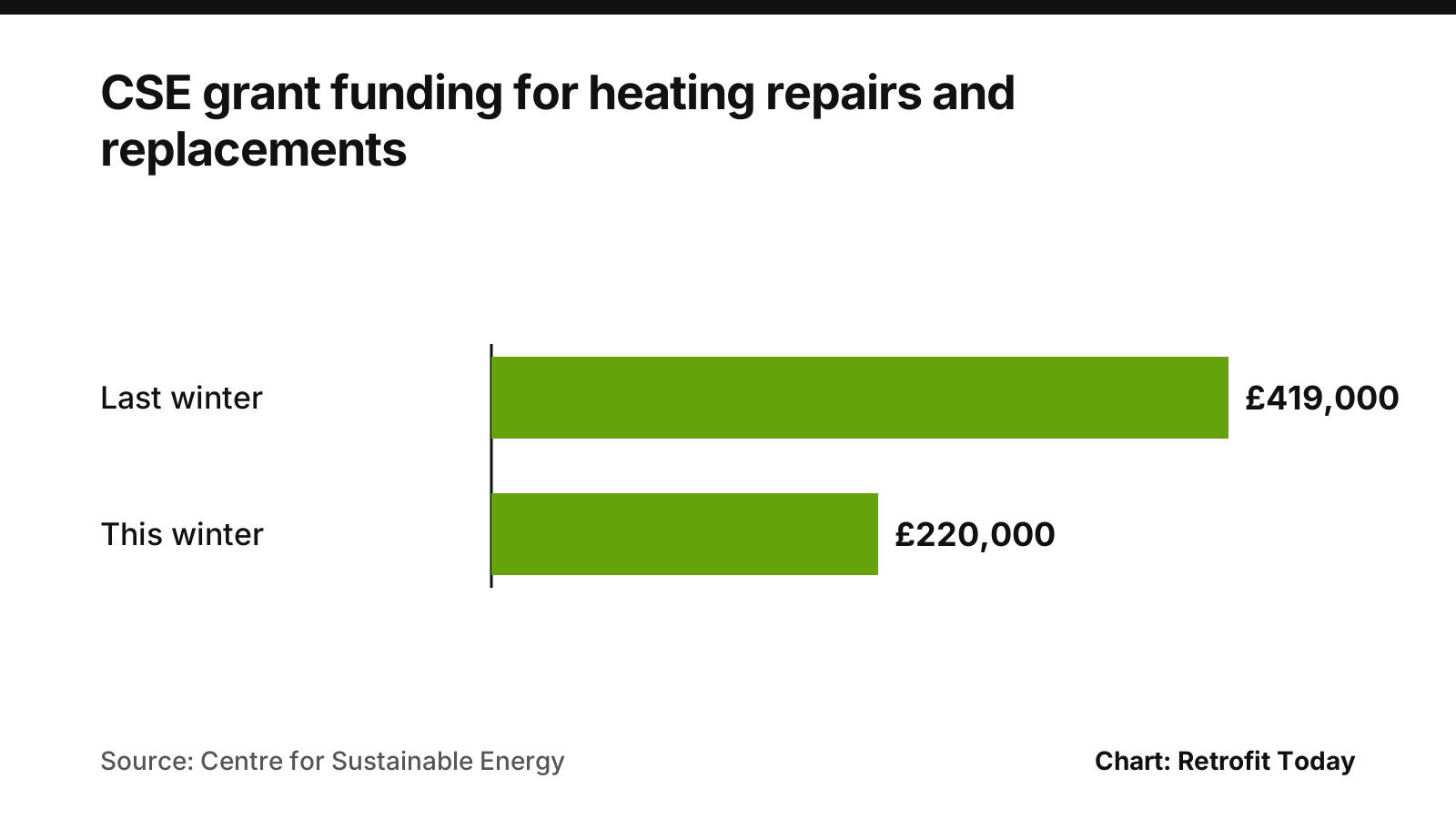
The Centre for Sustainable Energy (CSE) said on 5 November that its grant funding to repair and replace broken heating has fallen from £419,000 last winter to £220,000 this winter, and asked councils to restore crisis repair money in their plans for next year.
The charity attributed the fall to changes in council funding priorities around crisis resilience. It said that without what it described as National Grid's Winter Support Fund, which it said came in at the last minute, the total would have been £70,000, less than a fifth of last year's figure.
CSE said much of last year's money came from the Household Support Fund, which it said has now been replaced by the Crisis and Resilience Fund (CRF). The charity described the CRF as government money that councils decide how to spend, with more emphasis on resilience.
Mark Franklin, a CSE energy caseworker, said: "When it turns colder, more people need our help because old boilers tend to fail when they're working hardest. Many of the people we support are on low incomes and can't afford to fix them."
The caseload
CSE said it supported 20,143 households through its energy advice service last financial year. About 730 of those households had no heating or hot water, and around 470 of them included someone with a health condition that makes the cold more dangerous, the charity said.
Of the 730, CSE said it could pay for about 100 to have their heating repaired or replaced, around one in seven. Where there is no repair funding, it said, it gives people heaters or heated throws to keep one room warm, but these are expensive to run and do not fix the hot water.
| Winter | Grant funding for heating repairs |
|---|---|
| Last winter | £419,000 |
| This winter | £220,000 |
Franklin said: "For caseworkers like me, it's incredibly hard to support someone with a broken heating system when there's no funding to help them stay warm through the winter."
The Crisis and Resilience Fund
Department for Work and Pensions (DWP) guidance for local authorities in England states that the CRF runs from 1 April 2026 to 31 March 2029. The guidance lists breakage of an essential item, giving a boiler as an example, among the situations councils may treat as a crisis, but says it is at each authority's discretion to determine whether an individual's situation constitutes one.
CSE also pointed to the Autumn Budget, which it said included a further £100m for local authorities to provide targeted support to households acutely affected by rising energy bills. The charity noted that councils have discretion over how to use that money and asked them to make sure crisis repairs are covered.
The Department for Energy Security and Net Zero said the additional £100m is for discretionary support to households not eligible for the Budget's £100 Household Energy Payment. That payment goes to homes in council tax bands A to D in England, with up to 20 million households eligible, and will be made from January 2027, the department said. It added that VAT was removed from household electricity bills on 1 October, saving households an average of £45 a year.
Ofgem said energy prices rose by 4% from 1 October 2026 for a typical household using electricity and gas and paying by direct debit.
The wider picture
The English Housing Survey 2023-24, published by the Ministry of Housing, Communities and Local Government, found 246,000 dwellings in England, 1% of the stock, had heating systems in disrepair.
CSE, an independent national charity formed in 1979 with its registered office in Bristol, has previously received money from National Grid's Grid for Good Energy Affordability Fund, a £10.5m three-year programme. A £2.3m second phase of that funding followed an initial £1.2m allocation in February 2025, according to the charity.
Longer term, CSE said it hopes the Warm Homes Plan will help the households it supports switch to low carbon heat such as heat pumps, which it said are not susceptible to spikes in fossil fuel prices.
In the meantime, the charity is asking councils planning for next winter to build money for crisis repairs back into their CRF spending alongside investment in resilience. The fund runs until 31 March 2029.
On the record: National Grid, Department for Work and Pensions, Department for Energy Security and Net Zero, Ministry of Housing, Communities and Local Government
Sources
- Centre for Sustainable Energy (opens in a new tab) (accessed 2026-11-05)
- Centre for Sustainable Energy (opens in a new tab) (accessed 2026-11-05)
- Centre for Sustainable Energy (opens in a new tab) (accessed 2026-11-05)
- Department for Work and Pensions (GOV.UK) (opens in a new tab) (accessed 2026-11-05)
- Ministry of Housing, Communities and Local Government (GOV.UK) (opens in a new tab) (accessed 2026-11-05)
- Department for Energy Security and Net Zero (GOV.UK) (opens in a new tab) (accessed 2026-11-05)
- Ofgem (opens in a new tab) (accessed 2026-11-05)
This story was researched from the primary sources above and checked against them before publication. Spotted an error? Tell us and we will correct it promptly.