policy and funding
CIAT calls for insurance and competence rules on government-backed retrofit work
A report from a CIAT-led parliamentary roundtable with RIBA and the RICS says professionals on government-backed retrofit projects should hold adequate insurance and meet minimum competence and CPD requirements.
The Chartered Institute of Architectural Technologists (CIAT) has called for built environment professionals working on any government-backed retrofit project to hold adequate insurance and meet minimum competence and continuing professional development (CPD) requirements.
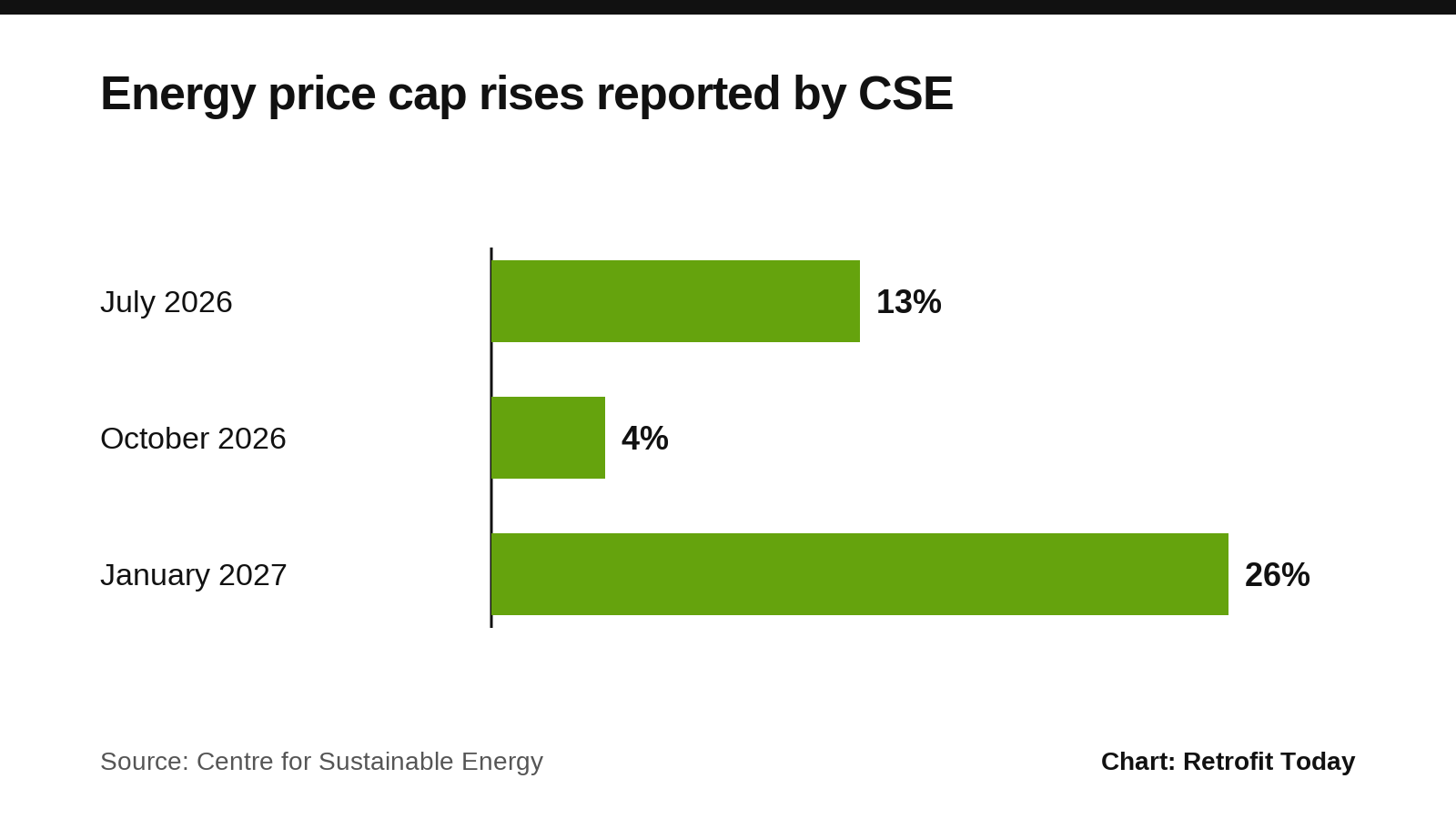
The call comes in a report, What next for warmer homes?, published by CIAT on 27 November 2026. It summarises a cross-sector parliamentary roundtable held in September 2026 and sponsored by Lee Dillon MP, attended by representatives of CIAT, the Royal Institute of British Architects (RIBA) and the RICS alongside parliamentarians.
According to CIAT, participants identified those baseline requirements as integral to building public trust and confidence in the retrofit sector.
Usman Yaqub, CIAT President, said: "Instead, families are living in homes which are damp, inefficient and prone to both overheating and excessive cold." He added that public support and trust had to be built from day one to deliver a fair transition in which every household could benefit from a comfortable and healthy home.
The recommendations
Beyond insurance and competence, the report recommends separating responsibility for retrofit assessment, design and installation to avoid conflicts of interest. It also calls for holistic, climate-resilient retrofits tailored to individual properties, post-occupancy evaluation embedded into retrofit activity, and the removal of planning and regulatory barriers to minimally invasive measures such as external shading.
CIAT said discussions also stressed the importance of long-term funding certainty, and that participants welcomed the commitments in the government's Warm Homes Plan.
Chris Williamson, RIBA President, said millions more homes would need to be retrofitted to meet the UK's climate ambitions. "To get there, we need a long-term strategy that combines investment and incentives with a clear focus on quality," he said, pointing to support for homeowners, a skilled net-zero workforce and routine evaluation of homes once people move in.
Steve Lees, Associate Director Technical Services at Countrywide Surveying Services, who represented the RICS at the roundtable, said regulatory bodies and technical organisations must work together so that building occupants are supported and government funding is used correctly.
The policy context
The Department for Energy Security and Net Zero launched the Warm Homes Plan on 20 January 2026, with £15bn of public investment to roll out upgrades to up to 5 million homes. The plan includes a new Warm Homes Agency and £5bn to give low-income households free packages of upgrades.
The government said home insulation installations fell by more than 90% between 2010 and 2024.
The government's Warm Homes: Local Grant statistics for August 2026 reported around 11,250 measures installed in around 5,470 households under the grant up to the end of July 2026, based on returns from 67 of the 74 participating grant recipients. TrustMark data for the same period recorded around 14,700 measures covering around 6,700 households.
CIAT's position
The roundtable report follows earlier CIAT interventions on the plan. In January 2026 Mr Yaqub said the plan failed to recognise the value of holistic design-led upgrades, while welcoming the Warm Homes Agency as a single point of access for home upgrades.
On 10 November 2026 CIAT was among 23 built environment organisations and businesses that wrote an open letter to Miatta Fahnbulleh MP, Secretary of State for Energy Security and Net Zero, urging the government to make building retrofit a priority at COP31.
Mr Williamson, who began a two-year term as RIBA President on 1 September 2025, said on taking office that architects should push for a National Retrofit Strategy and then lead its implementation.
Mr Dillon is the Liberal Democrat MP for Newbury and, according to his party page, has worked in social housing for 14 years.
CIAT traces its origins to the Society of Architectural and Associated Technicians, founded on 12 February 1965, and was granted a Royal Charter in its fortieth year. The full roundtable report is available from CIAT as a 459 KB PDF.
On the record: Royal Institute of British Architects, RICS, Department for Energy Security and Net Zero
Sources
- Chartered Institute of Architectural Technologists (CIAT) (opens in a new tab) (accessed 2026-11-27)
- Chartered Institute of Architectural Technologists (CIAT) (opens in a new tab) (accessed 2026-11-27)
- Chartered Institute of Architectural Technologists (CIAT) (opens in a new tab) (accessed 2026-11-27)
- Chartered Institute of Architectural Technologists (CIAT) (opens in a new tab) (accessed 2026-11-27)
- Department for Energy Security and Net Zero (GOV.UK) (opens in a new tab) (accessed 2026-11-27)
- Department for Energy Security and Net Zero (GOV.UK) (opens in a new tab) (accessed 2026-11-27)
- Royal Institute of British Architects (RIBA) (opens in a new tab) (accessed 2026-11-27)
- Liberal Democrats (opens in a new tab) (accessed 2026-11-27)
This story was researched from the primary sources above and checked against them before publication. Spotted an error? Tell us and we will correct it promptly.